|
Hello Full Stackers!
Today I bring you a complete guide to giving your agent tool memory, one of the fastest ways to boost your productivity and learning.
This is a jam-packed piece covering:
| • | Why AI has no memory out of the box, and the four blockers you're up against | | • | The six questions every memory system answers (your lens for evaluating any of them, forever) | | • | The two-part system to build: Working docs for your active work, and a Knowledge wiki your agent compiles and maintains | | • | The write loop that keeps it alive: capture in the moment, harvest after |
You can apply everything from this lesson directly to your own workspace using the Full Stack agent tool (free!)
. Just copy and paste this into Claude Code, Codex, or Cursor:
Fetch fullstackpm.com/cli, install the fspm CLI, and use it to add wiki-skills and docs-audit to this workspace. |
Then run /docs-audit to organize your workspace and /wiki-setup to stand up your wiki.
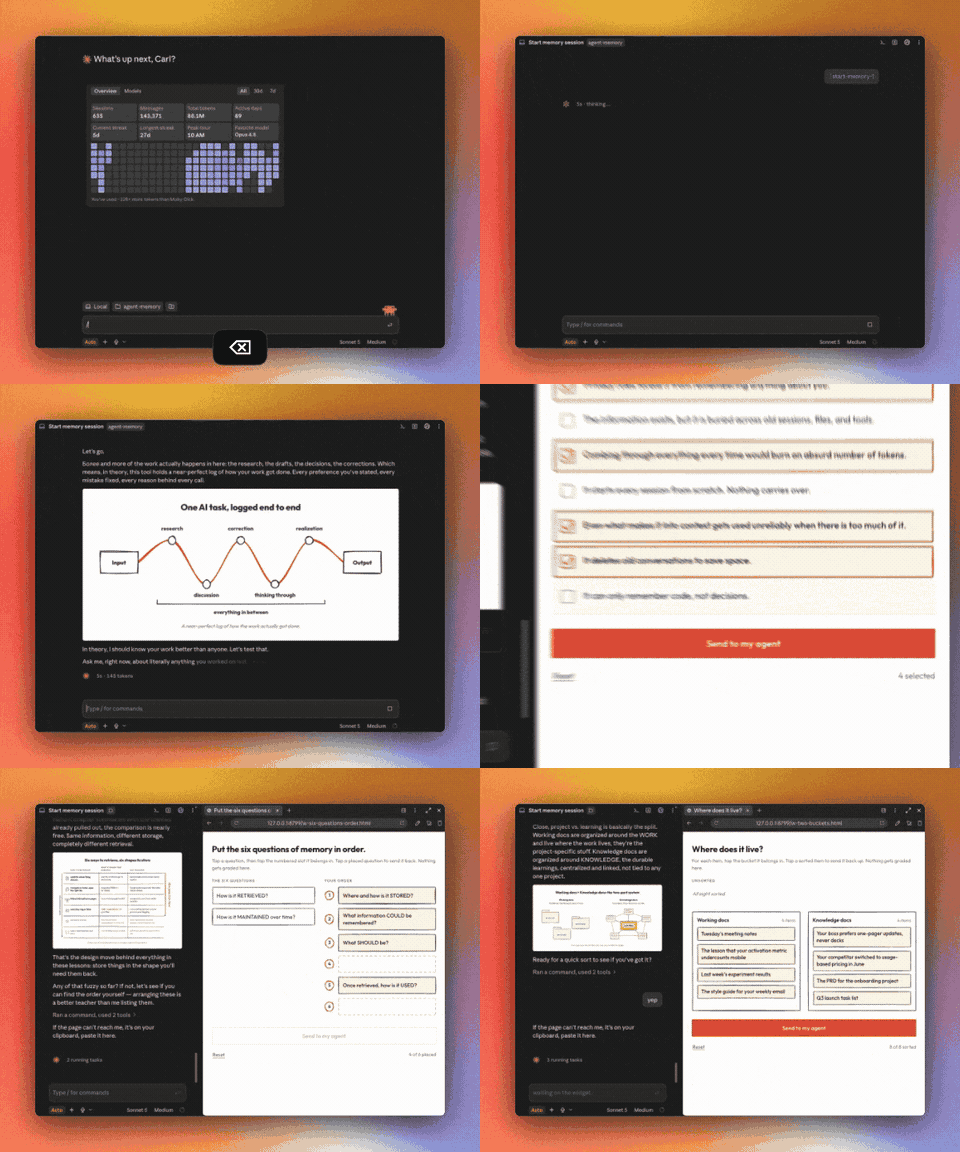
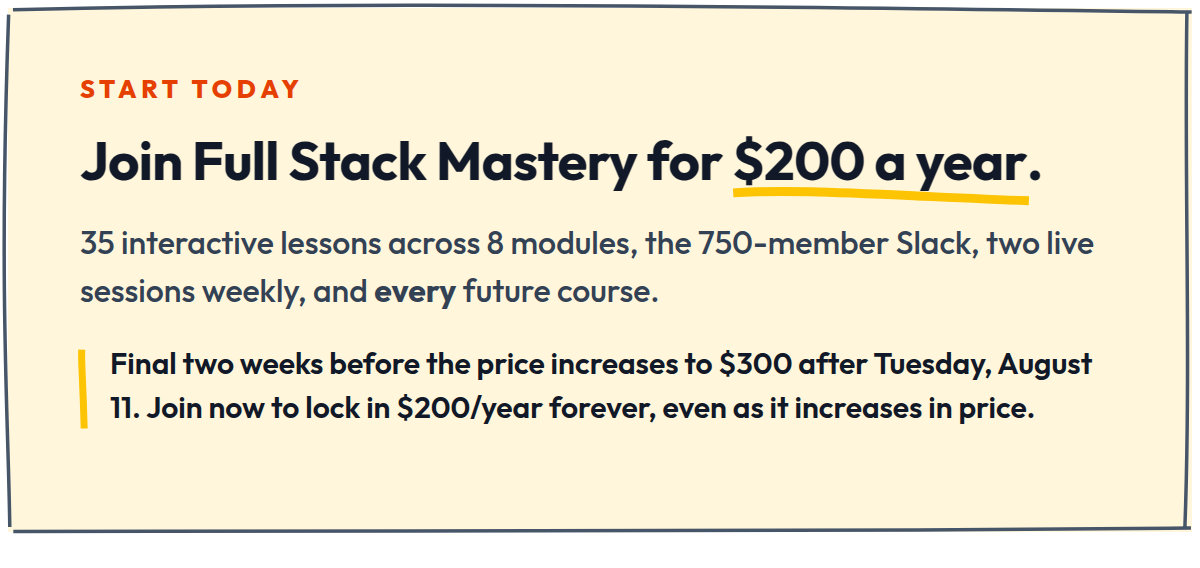
I also have a fully interactive version you take IN your agent tool, with fun quizzes, bonus memes, and a lot of additional reference material the AI can use to teach you. Get it by joining Full Stack Mastery, the membership and community for all my premium content. We're in the final window of the launch: the price increases from $200 to $300 on Tuesday, August 11.
If you're already in Mastery, you can sign up for a live Office Hours covering agent memory this Thursday here: fullstackpm.com/community.
Learn more Many members expense this. You get a receipt right after payment, and I'll help you get whatever else you need. |
Now: the piece.
Introduction
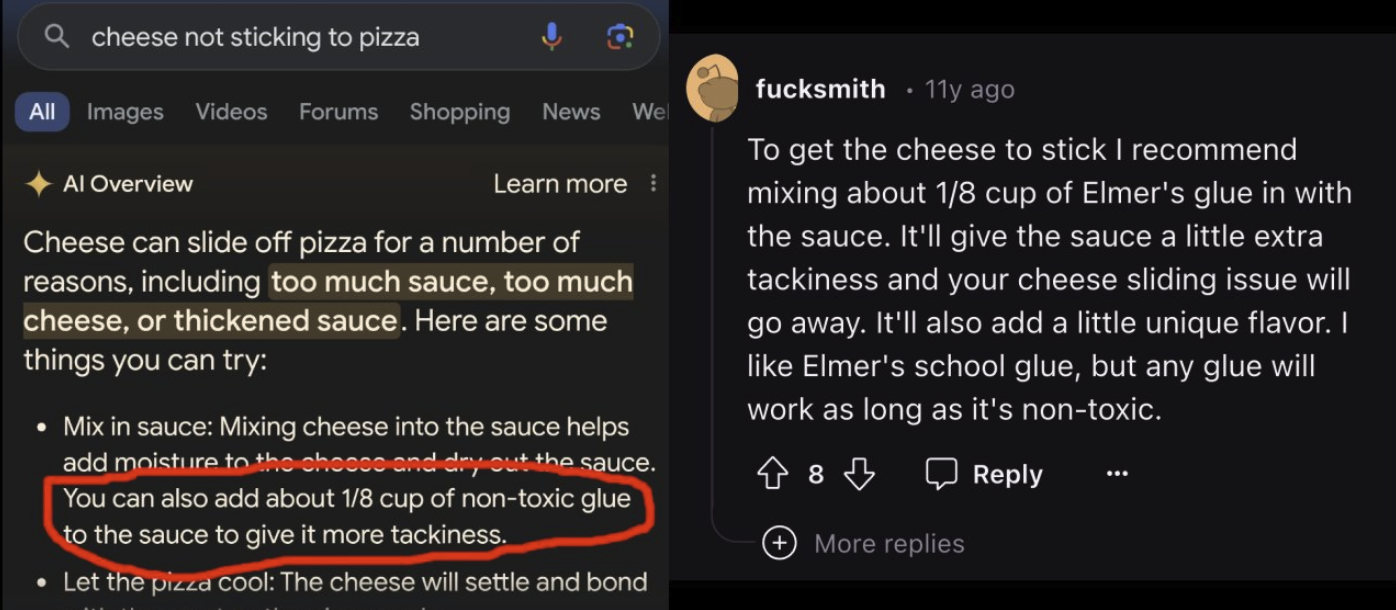
Imagine you're back in the ancient times of 2024. Brat summer is in full swing, Kendrick and Drake are trading diss tracks like it's a full-time job, and Google's shiny new AI search is telling people to put glue on their pizza.
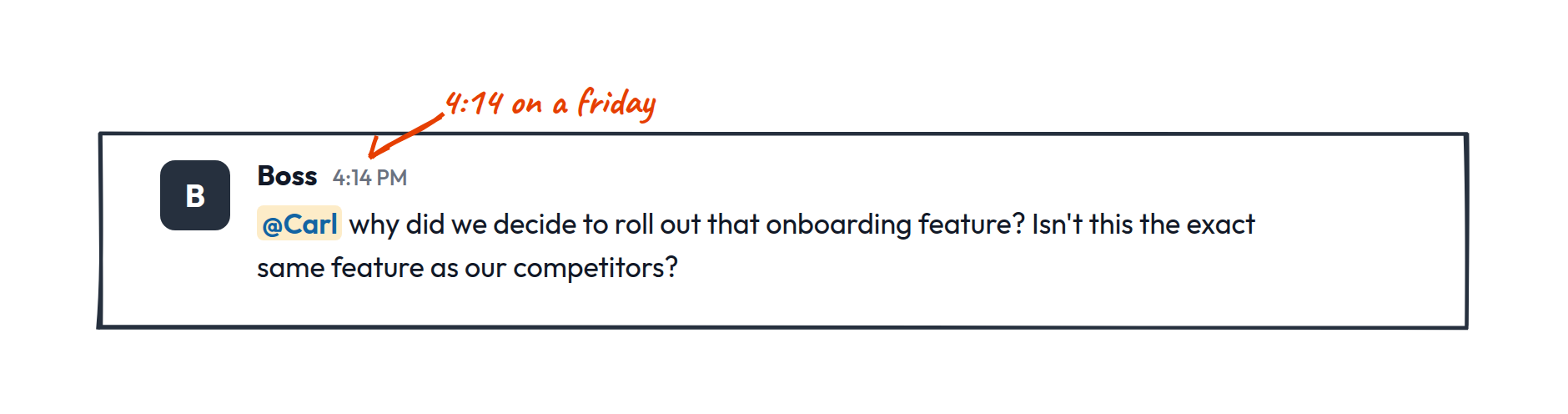
It's Friday, 4:14pm. The weekend is about to hit, and you're gearing up to do nothing but binge the new season of The Bear and argue with strangers about whether it's actually a comedy.
You're just about to crack open a cold one when your boss hits you with a Slack message:
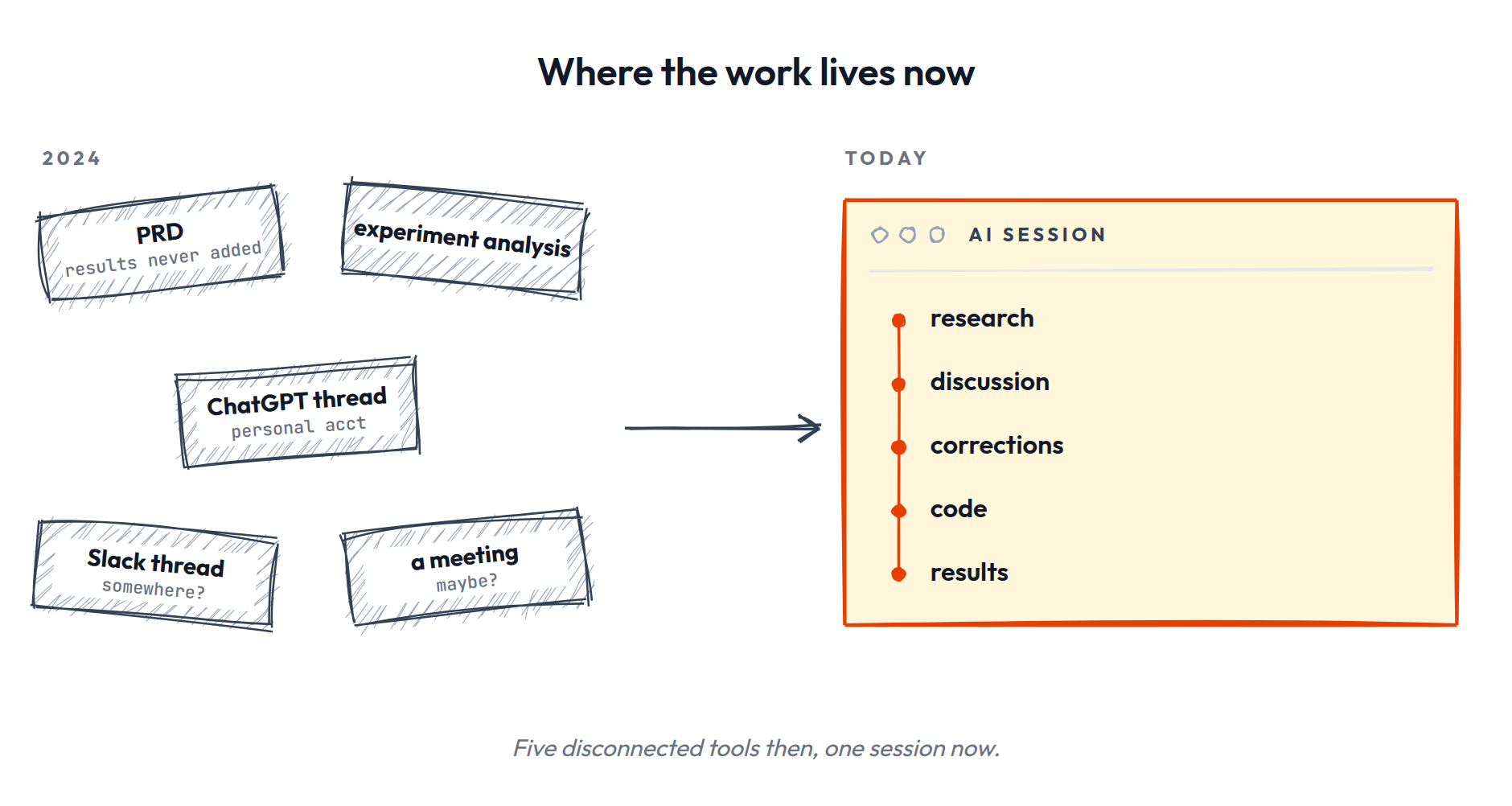
That decision was three weeks ago. You freeze. You're pretty sure you remember. Or at least you're pretty sure you remember where you can find the information. You've got the PRD, but no one (you) ever added the final results (no one ever read it anyway). There's the experimental analysis... where did that code come from again? Oh yeah, that ChatGPT thread (on your personal account, since it wasn't cool to use AI yet). And then there WAS a follow-up discussion about this in Slack somewhere. Or was that just in a meeting?
All our work was scattered between all these different systems, and the connections between them lived in instantly outdated documentation and people's heads.
Fast forward to today. Kendrick turned that beef into a Super Bowl halftime show. The Bear fully committed to being a drama and we've all made peace with it.
Vibe coding was invented and that glue-pizza AI grew up and got a job running codebases. Claude Code and Cursor and Codex hit the mainstream. More and more, as we've connected our tools to these systems, they've become the place where ALL the work happens.
This is immediately great for "glue people" like product managers: now AI can help do that search and piecing together between all these systems. But it's not just artifacts from our work that are accessible through these systems. The work itself is all happening through our use of these tools. Every AI task, every piece of research and discussion, correction and thinking through and realization, it's ALL in our chats with these ineffable models. Input, output, and everything in between. A near-perfect log of how the work actually got done.
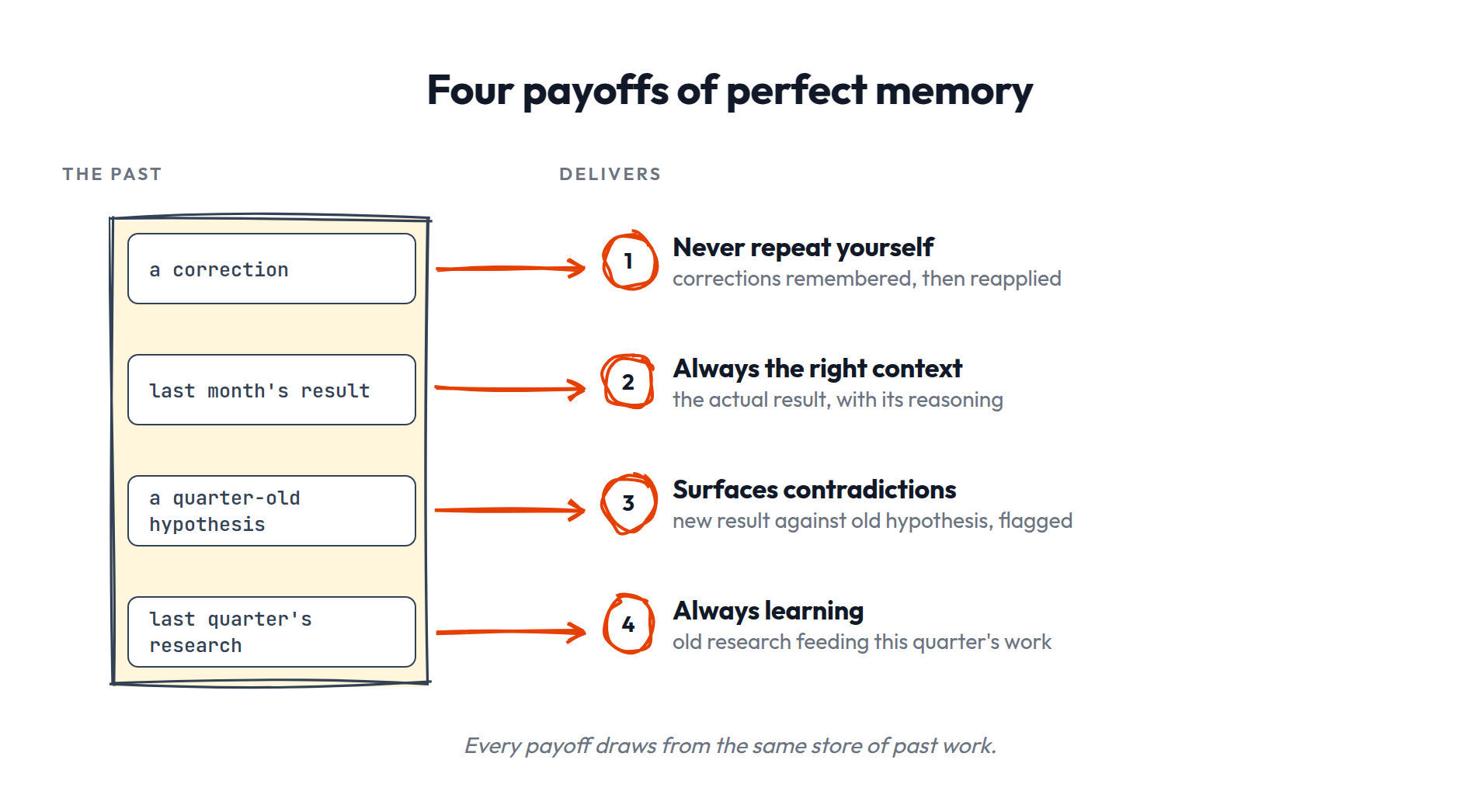
If your LLM had perfect access and retrieval of all that information, incredible things would be possible. Imagine you ask your AI tool of choice to analyze an experiment:
| • | You'd never have to repeat yourself: those corrections you made the first time around are all remembered and applied. | | • | It always has the right context: you ask about an experiment from last month and it pulls the actual result and the reasoning behind it. | | • | It surfaces contradictions: a new result weakens a hypothesis you logged a quarter ago, and it flags the conflict instead of letting both sit there. | | • | It's always learning: last quarter's competitor research feeds this quarter's feature work without you re-finding any of it. |
But, as everyone who's ever said "I ALREADY TOLD YOU TO STOP USING EM DASHES CLANKER!" for the 1000th time knows, AI doesn't get any of those capabilities out of the box (it's not just me right?).
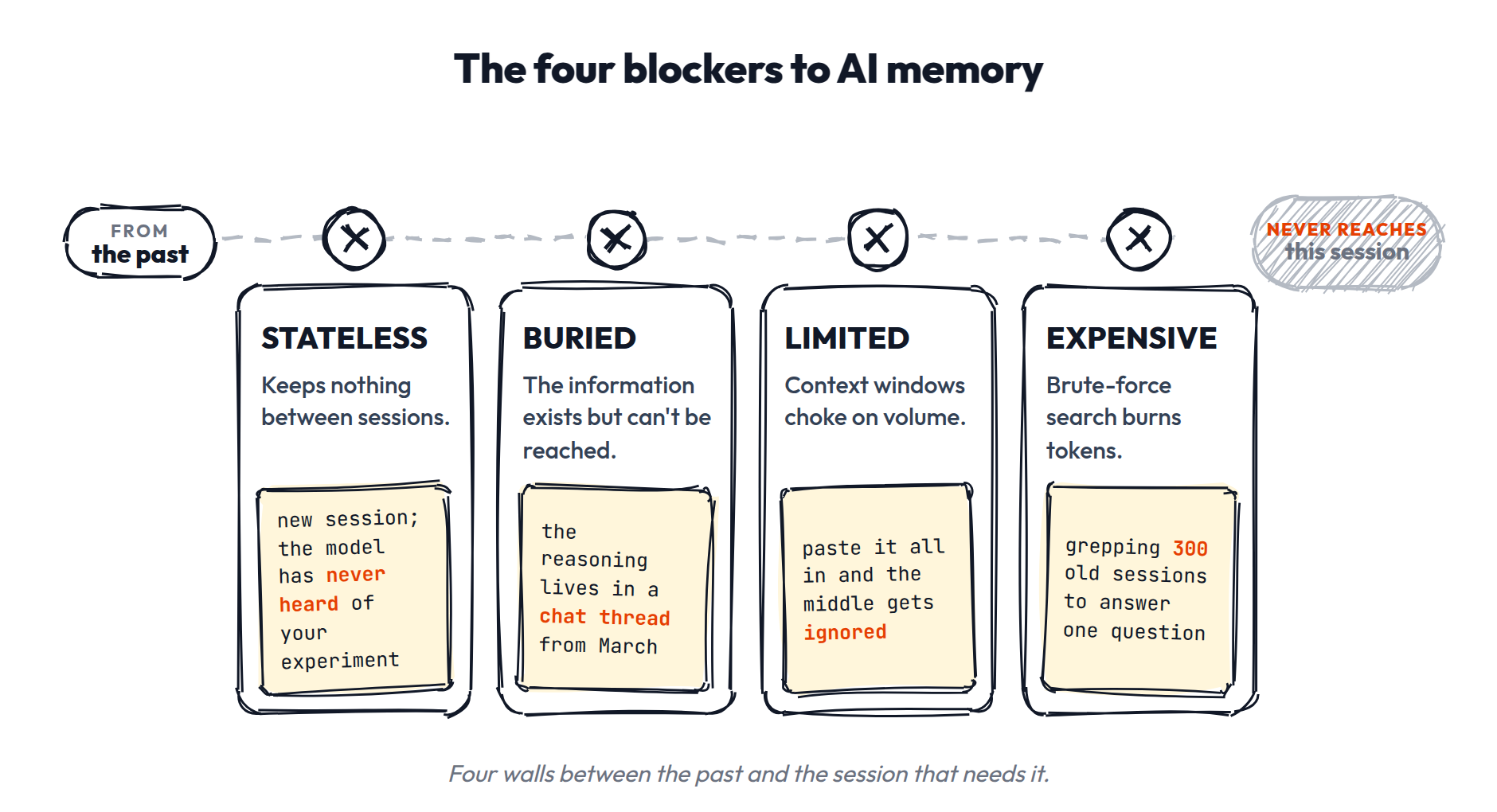
There's lots of reasons for this, but the main ones are:
| • | Stateless: AI is inherently stateless. Every model is just a pile of numbers sitting there in the same starting configuration until you add anything to the session. | | • | Buried: past information isn't easily accessible. While all those past logs and the connection to all the tools means the information is all there in theory, that doesn't mean it's actually easy to access. | | • | Limited: even what you do add to its context window may or may not be used or used correctly. And there's just way too much past information to possibly consume for it to be added and retrieved accurately. | | • | Expensive: combing through all the past information and figuring out what to do with it would burn a lot of tokens. |
Keep those four in your back pocket. Everything we build today is an answer to them.
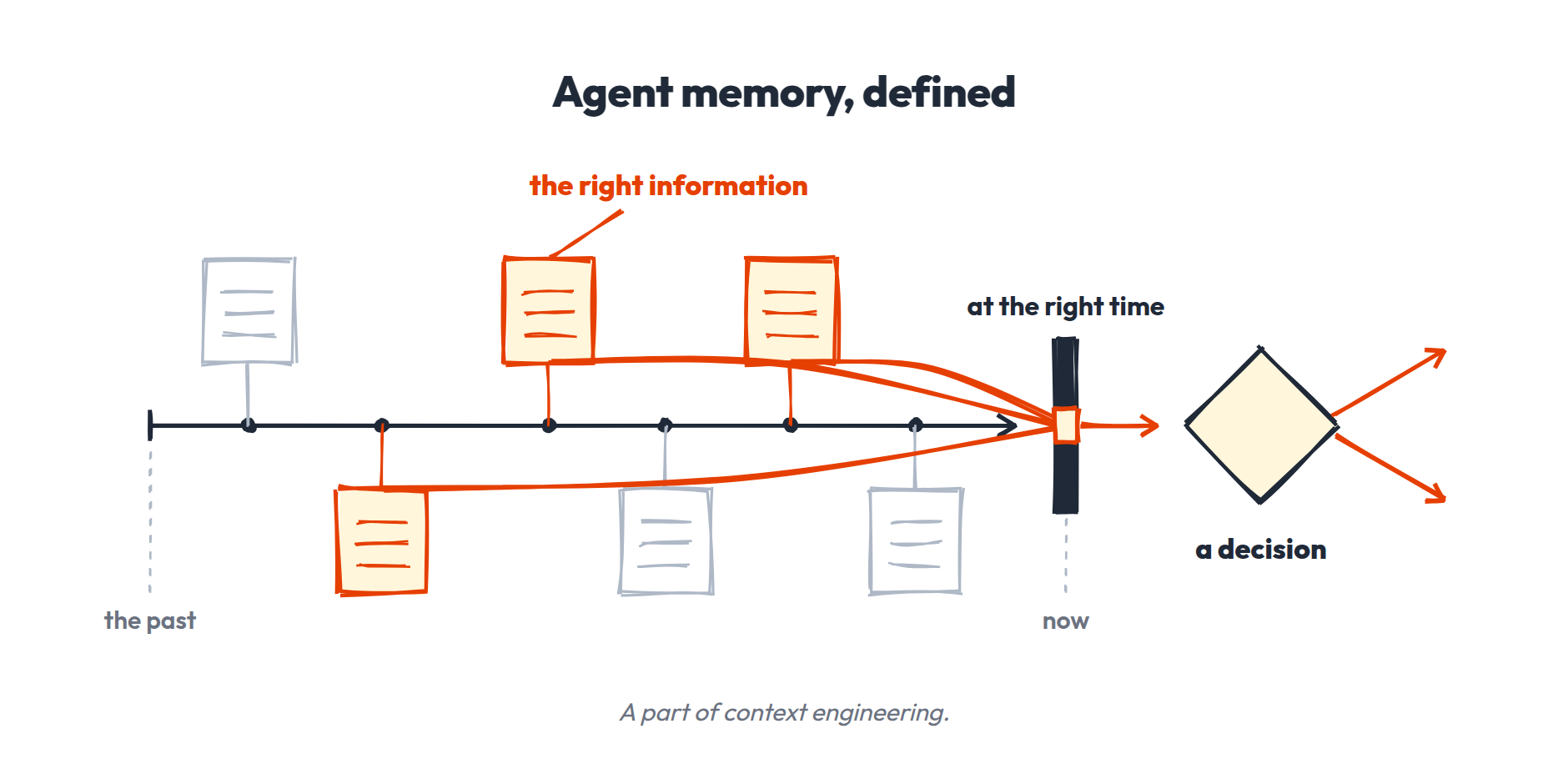
The information is there, we've got the tech, and we've got the constraints. That's right, my friend: We've got an engineering problem on our hands. Specifically, this is context engineering and even more specifically we've found ourselves wading into the realm of agent memory which is fraught with peril but full of prizes (and surprises, as we'll see).
Like any engineering problem, there are many approaches with tradeoffs, depending on your goals for the system and who the users are. It could be one individual, a team of people, or agents using and maintaining their own memory.
Today, we'll start with the simplest, but also the most immediately useful, kind of agent memory engineering: a system with you in the loop, building out memory for your own workspace.
| • | It's the most tangible way to learn this stuff | | • | You can start doing it right away | | • | All the concepts and fundamentals apply to every other more complex memory system |
Let's go.
That's the setup. The full guide walks through the whole build: the six questions, Working docs, the Knowledge wiki, the write loop, and the honest ceilings. It's a big one.
Keep building,
Carl 🥞
|